
Industry First | Tianma 3D Deep Fusion VR Display Solution Presents a Realistic Vision
According to market research firm IDC, the global shipment of AR/VR headsets reached 11.23 million units in 2021, a significant increase of 92.1% year-on-year. At the same time, the Chinese AR/VR market is growing rapidly, and IDC predicts that the compound growth rate of the Chinese AR/VR market will reach 42.2% from 2021 to 2026. By 2026, China's AR/VR market volume will leap to the second largest in the world.
However, despite its excellent immersion and interactivity, issues such as user dizziness and blurry images have always plagued the widespread adoption of VR devices. Tianma has accumulated rich experience in the field of wearable displays and launched the industry's first Deep Used 3D VR display solution, allowing users to truly immerse themselves in the VR world with comfort.
Relieve dizziness with the support of new optical systems
Due to the fact that 3D images in AR and VR devices are always fixed on the screen in front of the user, reflecting a sense of distance through the principle of binocular parallax, the focus distance of the human eye remains unchanged, lacking depth of field information in the real world, confusing the position and focal length correspondence in the brain, which can easily lead to adverse reactions such as visual fatigue and dizziness (referred to as convergence adjustment conflict, VAC) for users, Seriously affecting the actual user experience.
The 3D depth fusion VR display scheme launched by Tianma this time uses bifocal lens technology to display images of the front and rear image planes at different brightness on the front and rear lenses. The front and rear images are superimposed to form a 3D shape with depth of field, and the depth difference of the 3D shape is used to expand the depth of the VR scene.
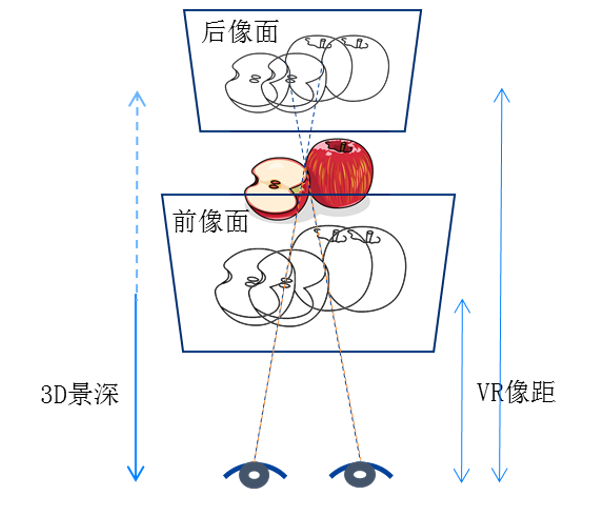
Therefore, VR display screens truly have the difference between close range and far range, allowing users to naturally feel the depth of field with both eyes, no longer feeling dizzy when watching close-up images, and also alleviating fatigue caused by binocular disparity and mismatch of depth of field information.
Technological innovation, simulating real visual experiences
Another technological breakthrough of this solution lies in synchronizing the LCD screen with a polarization modulator (PM), and combining it with a bifocal lens and driving timing to achieve the function of switching the depth of field in the image. When a user gazes at a distant object in the VR screen, the close-up image becomes blurred like the real world; When the user looks up close, the situation is the opposite.
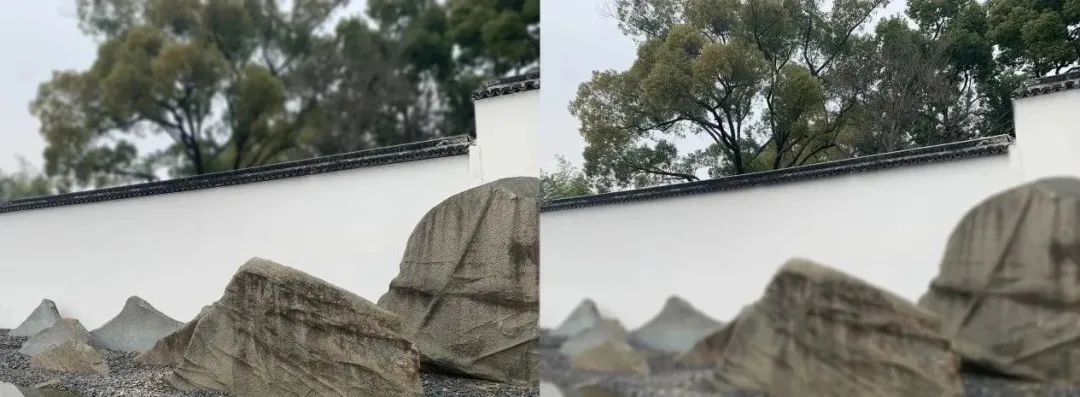
The clarity of VR display images is related to the focusing position of the human eye, in order to mimic the way the human eye observes nature and presents the image. The depth of field and visual restoration effect can not only immerse people in the scene, but also increase comfort and alleviate convergence adjustment conflicts. Users can enjoy a more enjoyable gaming experience in the virtual environment for a long time.
Faced with both opportunities and challenges in the market of intelligent wearable devices, Tianma actively explores cutting-edge technologies. The new generation of Tianma's ultra 1400PPI, 5ms grayscale ultra fast response VR display has also made its debut at the CES 2023 exhibition.
In the future, Tianma will continue to enhance its innovative research and development capabilities in wearable products, and continue to conduct technological research and development in key performance and functions such as low power consumption, ultra-high resolution, and narrow borders, to meet the diverse and multi-level display needs of customers.